Into the Inferno
Documentary • 2016 • 1 hr 47 min

Starring
Werner Herzog, Clive Oppenheimer, Mael Moses, Sri Sumarti, Tim D. White
Directed By
Written By
User Reviews

Anything Herzog touches turns to lava… wait… I mean gold.
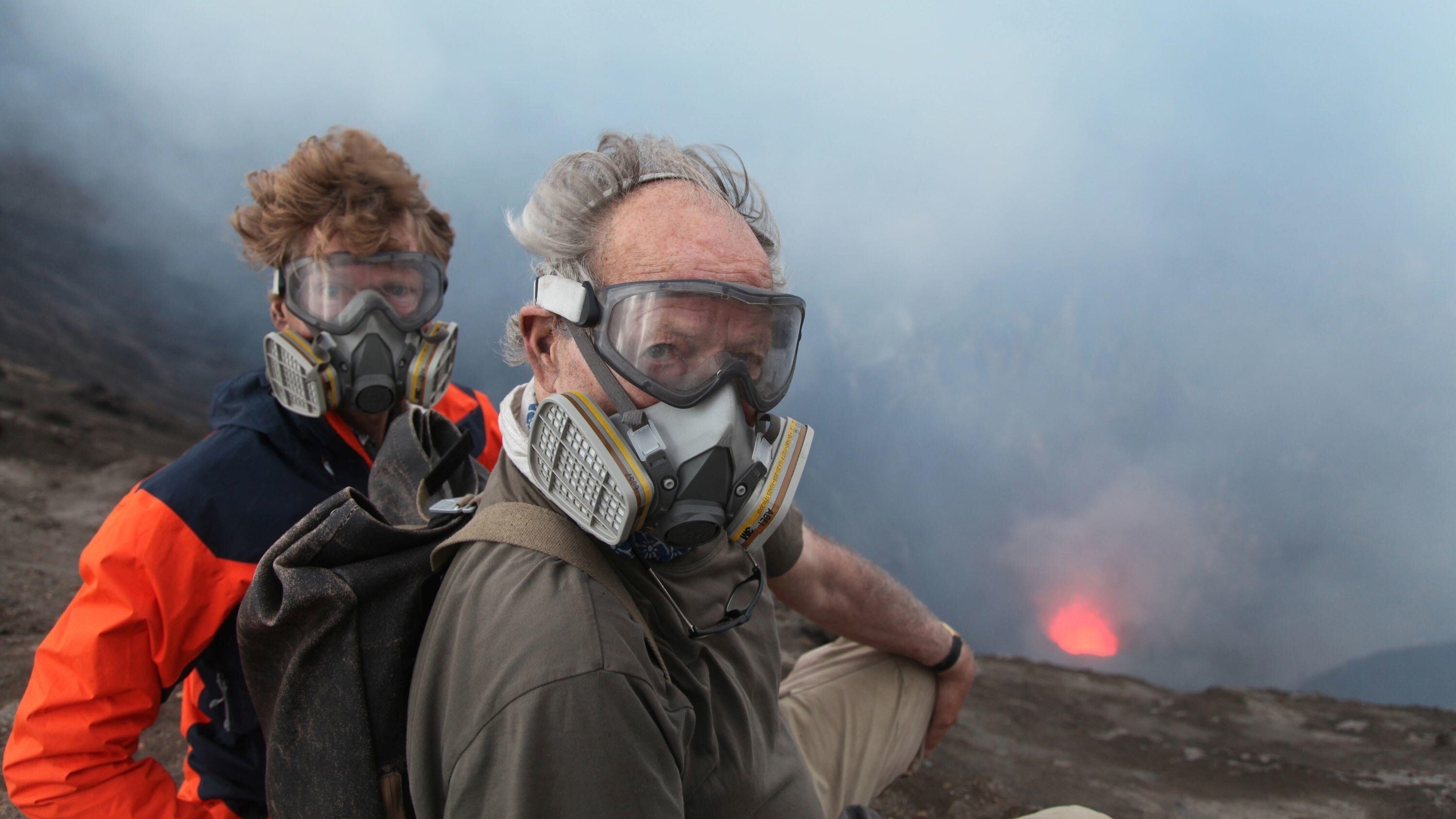
Not a typical doc. This is a Werner Herzog joint. This is ultimately about people more than volcanos.

Best documentary I have watched in ages. I recommend this to everyone. Amazing shots and interviews.

I'd be happy to listen to Werner Herzog read the phone book so this is a no-brainer.

Classic Werner. The sound of his voice alone makes me like this doc. Incredible footage from north Korea aswell.

Really interesting histories of the world’s biggest volcanoes and hypnotic to watch.

Good documentary between religion and nature.

Interesting, with some beautiful footage

Fascinating documentary from Werner herzog, incredible cinematography

Werner Herzog never disappoins, always suprises with his weirdness and provides a greater outlook on humanity.
Stats
Ratings
Attributes
Watch With
Shortly after the Gulf War, oil fires were raging all through Kuwait. In the week before this sea of fire would be extinguished, Werner Herzog filmed this apocalyptic landscape with its murky skies, scorched earth and capricious flames.
Bruno Stroszek is released from prison and warned to stop drinking. He has few skills and fewer expectations: with a glockenspiel and an accordion, he ekes out a living as a street musician. He befriends Eva, a prostitute down on her luck and they join his neighbor, Scheitz, an elderly eccentric, when he leaves Germany to live in Wisconsin.
The film follows Kaspar Hauser, who lived the first seventeen years of his life chained in a tiny cellar with only a toy horse to occupy his time, devoid of all human contact except for a man who wears a black overcoat and top hat who feeds him.
Fitzcarraldo is a dreamer who plans to build an opera house in Iquitos, in the Peruvian Amazon, so, in order to finance his project, he embarks on an epic adventure to collect rubber, a very profitable product, in a remote and unexplored region of the rainforest.
A film that describes the love-hate relationship between Werner Herzog and Klaus Kinski, the deep trust between the director and the actor, and their independently and simultaneously hatched plans to murder one another.
We do not know when and how we will die. Death Row inmates do. Werner Herzog embarks on a dialogue with Death Row inmates, asks questions about life and death and looks deep into these individuals, their stories, their crimes.
A group of settlers traveling through the Oregon High Desert in 1845 find themselves stranded in harsh conditions.
A documentary about the legendary series of nationally televised debates in 1968 between two great public intellectuals, the liberal Gore Vidal and the conservative William F. Buckley Jr. Intended as commentary on the issues of their day, these vitriolic and explosive encounters came to define the modern era of public discourse in the media, marking the big bang moment of our contemporary media landscape when spectacle trumped content and argument replaced substance. Best of Enemies delves into the entangled biographies of these two great thinkers, and luxuriates in the language and the theater of their debates, begging the question, "What has television done to the way we discuss politics in our democracy today?"